


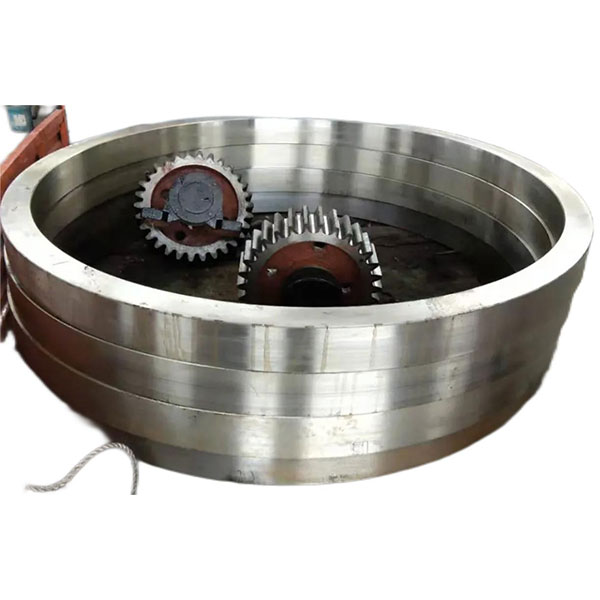
China Suppliers Factory for Slewing Ring Yaw and Pitch Bearings for Wind Power Applications
Overview of Roller Bearings & Pulleys
Roller bearings and pulleys play crucial roles in the mechanical and engineering fields, providing reliable support and transmission functions for various equipment and machinery. First, let us delve into the importance of roller bearings and their role in various application fields.
Structure and Function of Roller Bearings
The structure of roller bearings consists of an inner ring, outer ring, rolling elements (rollers), and a cage. This design aims to reduce mechanical friction and support the load on rotating shafts to enhance the operational efficiency of mechanical equipment. Through rolling friction, they effectively reduce frictional force and energy loss, thereby making the equipment more efficient and smooth in operation. Due to their outstanding performance, roller bearings are widely utilized in vehicles, motors, fans, and other equipment, providing stable rotational support and enhancing their efficiency and reliability.
Applications of Pulleys in Transmission Systems
On the other hand, pulleys are mainly used in transmission systems to effectively transmit power and rotational motion. Pulleys are typically circular, with outer teeth or protrusions that come into contact with transmission belts or V-belts to transfer power to other mechanical components. In mechanical transmission systems, pulleys play a crucial role and can be used to alter transmission ratios, transfer torque, achieve variable speeds, and drive other mechanical devices.
Selection, Installation, and Maintenance
In engineering and mechanical design, the correct selection and use of roller bearings and pulleys are paramount. Suitable roller bearings and pulleys can enhance equipment stability, reduce energy loss, improve operational efficiency, and prolong equipment service life. Therefore, proper selection, installation, and maintenance of roller bearings and pulleys are crucial. This meticulous handling directly impacts the performance and reliability of the equipment.
In summary: Roller bearings and pulleys play indispensable roles in the mechanical and engineering fields. Through reducing friction, supporting rotating shafts, and transmitting power, they provide reliable support and transmission functions for various equipment and machinery, thereby driving the continuous development of engineering design and mechanical applications.